
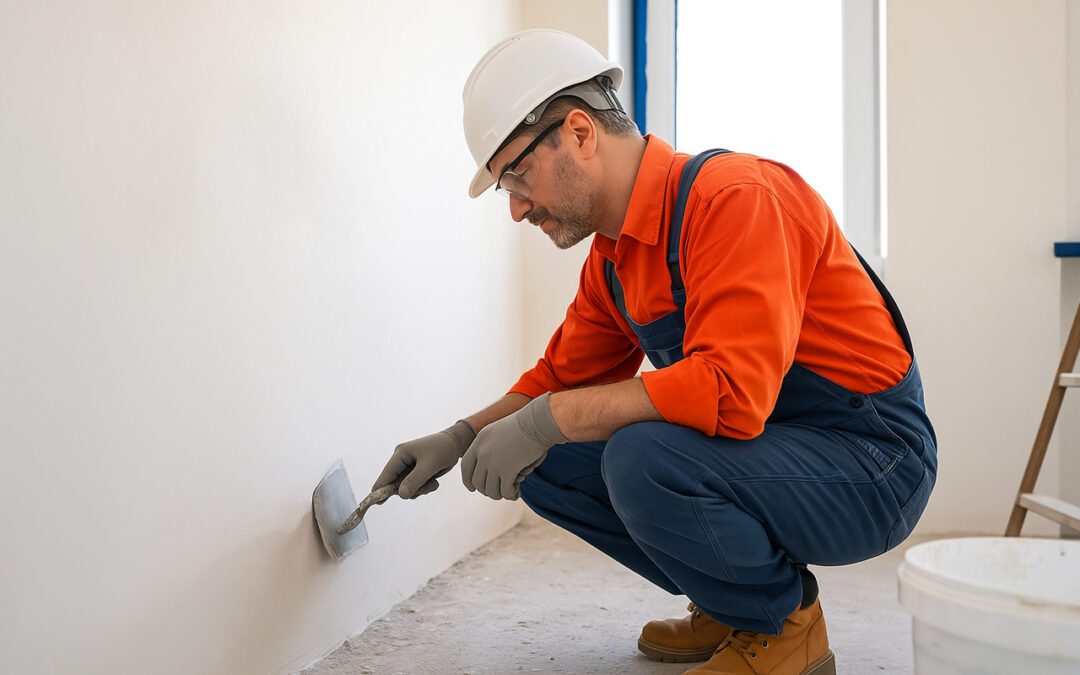
How to Repair Water Damage Before Plastering
Water damage weakens walls and ceilings, causing staining, crumbling plaster, and mould growth. Proper repair before plastering ensures a smooth, durable finish.
Step 1: Identify the Source
Find the cause of the leak or damp. Common sources include:
- Roof leaks
- Plumbing issues
- Condensation in bathrooms or kitchens
Fixing the source prevents recurring damage after plastering.
Step 2: Remove Damaged Material
Cut out soft, swollen, or mouldy plaster and drywall. Remove debris for a clean working surface.
Step 3: Dry the Area
Use dehumidifiers, fans, or natural ventilation to completely dry walls and ceilings. Wet surfaces will prevent plaster from adhering properly.
Step 4: Treat Mould and Mildew
Apply anti-mould solutions to prevent regrowth. Professionals often treat underlying timber or plasterboard to ensure long-term protection.
Step 5: Reinforce and Repair
Replace or reinforce weakened sections with new plasterboard. Apply mesh tape over repaired joints to prevent cracking.
Step 6: Prepare for Plastering
- Sand rough edges
- Apply a bonding agent if needed
- Ensure walls are clean and dry
Professional Help
Hiring experts ensures proper assessment and repair: professional drywall repair services. For skimming after repairs, check cost of skimming walls and ceilings.
Conclusion
Repairing water damage before plastering prevents structural and cosmetic issues. Professional repair ensures smooth, long-lasting results. Request a quote to restore your walls and ceilings efficiently.